

This article is currently available in English.
Quick answer: the single biggest saving is the temperature setting. India's Bureau of Energy Efficiency (BEE) estimates that raising the AC setting by 1°C saves about 6% electricity, and moving from 20°C to 24°C saves about 24%. After that, clean filters, a well-ventilated outdoor unit, inverter operation and regular servicing make the biggest difference.
In most Indian homes the air conditioner is the largest single electricity load in summer. The good news is that you do not need to suffer the heat to cut the bill. These 12 tips are ordered roughly by how much they save for how little effort.
1. Set the temperature to 24°C (or higher)
BEE recommends 24°C as the default setting, and since 2020 star-labelled room ACs sold in India ship with a 24°C default. Each degree lower adds roughly 6% to consumption. Setting 18°C does not cool the room faster; it only keeps the compressor running longer.
2. Use the fan with the AC
A ceiling fan on low speed spreads cool air and makes 25–26°C feel like 23–24°C, so you can keep the thermostat higher.
3. Clean the filters every 2–3 weeks in summer
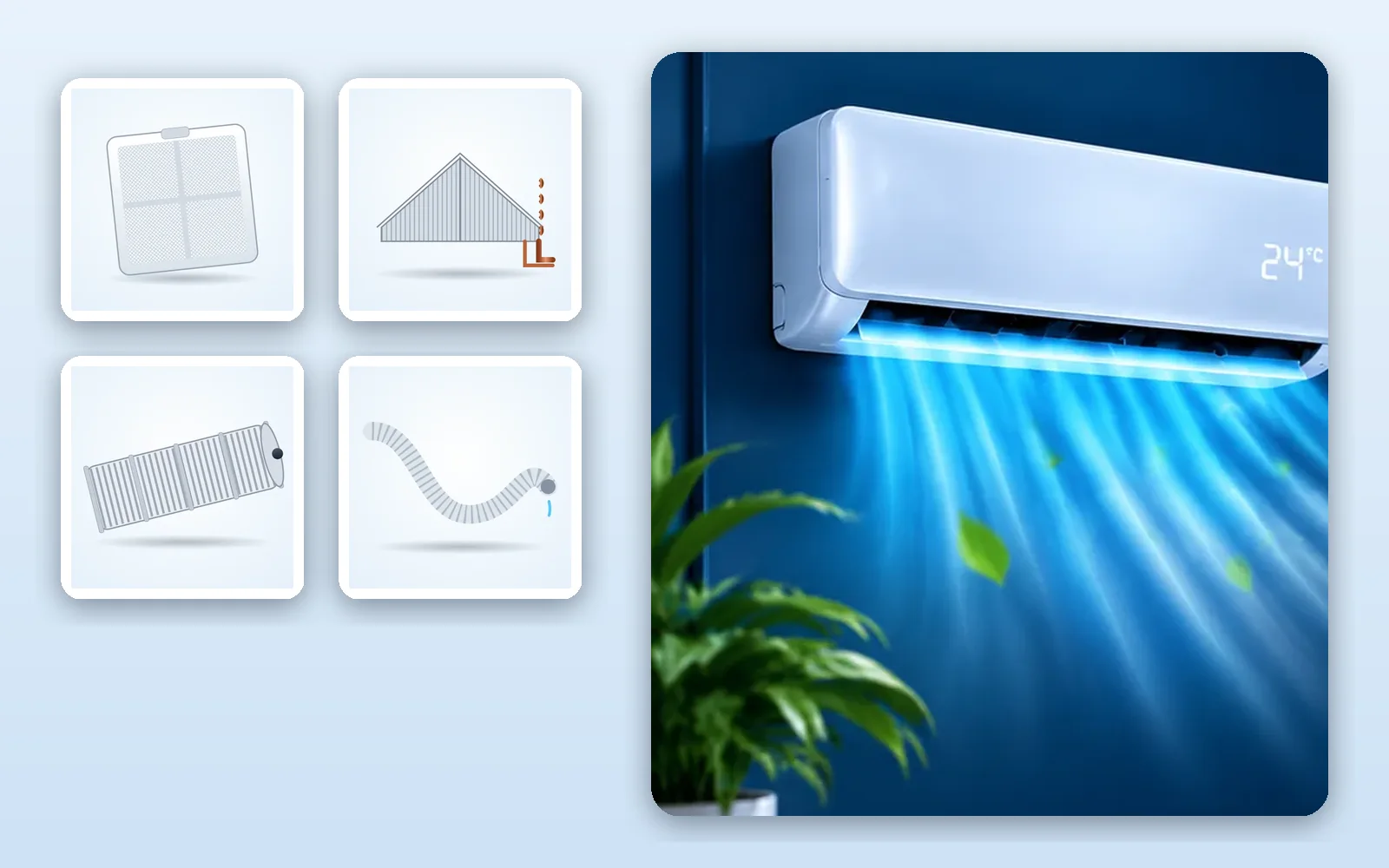
Dusty filters reduce airflow, make the compressor run longer and cut cooling. Slide them out, rinse with plain water, dry fully and refit. It takes five minutes and costs nothing.

4. Keep the outdoor unit shaded and breathing
The outdoor unit throws heat out. Direct afternoon sun, dust on the condenser fins, or walls and grills boxing it in force it to work harder. Keep at least a foot of open space around it and keep plants, boxes and clothes away from it.
5. Service the AC before summer
A full service (coil cleaning, drain check, outdoor unit cleaning, electrical checks) restores cooling efficiency that slowly drops with dust build-up. See when to service your AC.
6. Seal the room
Close doors and windows, use curtains or blinds on sun-facing windows, and block gaps under doors. Every bit of hot air that leaks in must be cooled again.
7. Use sleep mode and timers
Sleep mode gradually raises the set temperature at night as your body cools. A timer that switches the AC off in the early morning, when it is cooler outside, can save several hours of running a night.
8. Let an inverter AC run steadily
Inverter ACs save power by slowing the compressor down once the room is cool. Switching them on and off repeatedly wastes that advantage. Set a sensible temperature and let it run.
9. Choose the right tonnage
| Room size (approx.) | Typical AC size |
|---|---|
| Up to 120 sq ft | 0.8–1 ton |
| 120–180 sq ft | 1–1.5 ton |
| 180–250 sq ft | 1.5–2 ton |
Top-floor rooms, west-facing walls, large windows and kitchens need more capacity. An undersized AC runs flat out all day; an oversized one cycles inefficiently and does not remove humidity well.
10. Read the BEE star label properly
BEE tightened its star rating thresholds from 1 January 2026, so a model rated 5-star under the 2025 table is rated 4-star under the new one. Compare the ISEER value printed on the label (higher is better) and check the label's validity period, not just the star count.
11. Avoid heat sources in the AC room
Ovens, irons, old incandescent bulbs and lots of electronics all add heat. Switch them off or use them elsewhere while the AC is running.
12. Fix gas leaks and electrical faults promptly
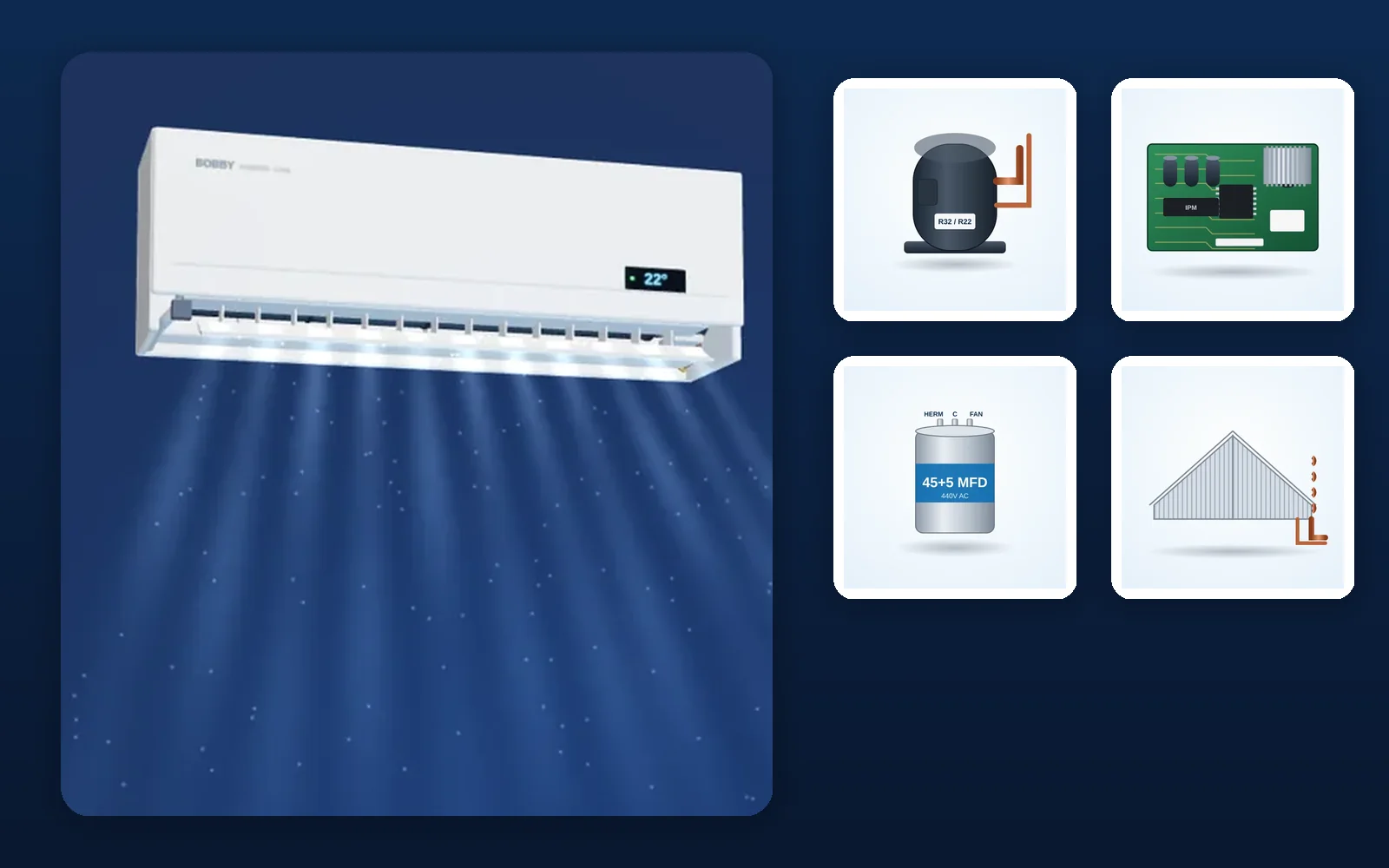
An AC with low refrigerant or a weak capacitor runs much longer for the same cooling. If cooling drops or the bill jumps without a reason, book a check rather than lowering the temperature further.
How much can you actually save?
As a rough example using BEE's figure: if your AC uses 300 units a month at 20°C, running it at 24°C could save around 70 units a month. Try the AC electricity cost calculator on our FAQs page to estimate your own running cost.
Frequently asked questions
What is the best AC temperature to save electricity?
24°C is the BEE-recommended default. Each degree higher saves roughly 6%, so 25–26°C with a fan saves even more while staying comfortable.
Does an inverter AC really save electricity?
Yes, when it is allowed to run steadily. It slows the compressor once the room is cool instead of switching fully on and off, which uses less power over a long day.
How much electricity does a 1.5 ton AC use per hour?
It varies with star rating, outside temperature and settings, but a 1.5 ton inverter AC typically uses well under 1.5 units an hour once the room is cool. Check the annual kWh on the BEE label for your model.
Does cleaning the AC filter reduce the bill?
Yes. Clogged filters reduce airflow so the AC runs longer for the same cooling. Cleaning them every 2–3 weeks in summer is the cheapest saving there is.
Did the AC star ratings change in 2026?
Yes. BEE's revised star rating table came into force on 1 January 2026 with stricter ISEER thresholds, so compare the ISEER value and label year, not just the stars.
General guidance only. For electrical faults, always call a trained technician.
Need help with this?
Book a doorstep visit from BOBBY in Narasaraopet.